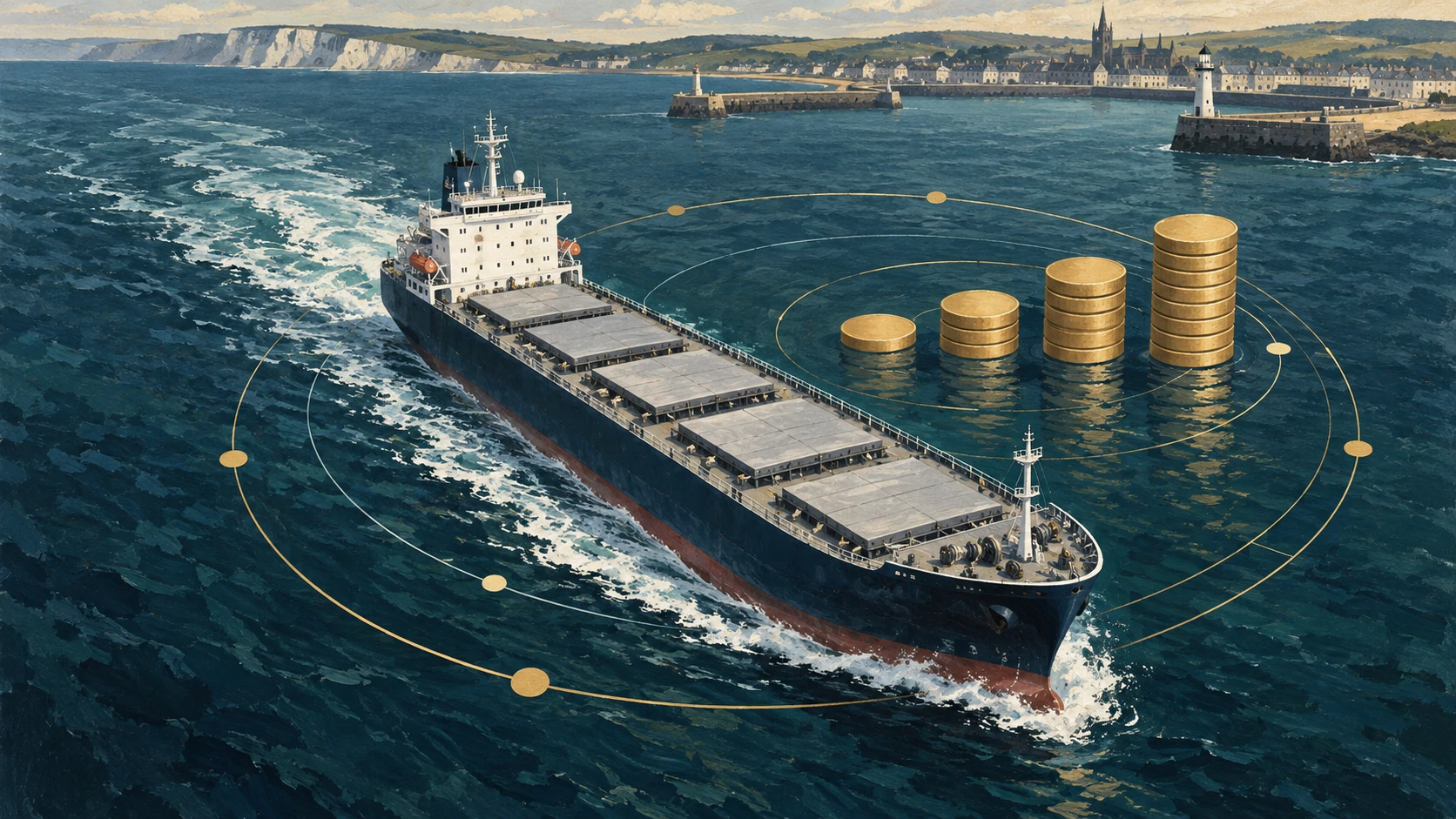
**Verified development.** ICE Futures Europe’s UK Allowance (UKA) auction on 12 August 2026 is the first remaining-2026 auction to carry the higher volume associated with the United Kingdom Emissions Trading Scheme (UK ETS) expansion to domestic maritime. The auction volume rises to 2,173,000 UKAs, from 2,074,500 at the 29 July auction. ICE states that 983,000 additional allowances will be distributed evenly across the remaining 2026 auctions because domestic maritime emissions have entered the scheme part-way through the year.
The underlying maritime regime took effect on 1 July 2026. It covers ships of 5,000 GT and above undertaking in-scope domestic activity, including emissions from voyages between UK ports and in-port emissions in the UK. Maritime operators receive no free allocation; the additional cap is therefore reflected in auction supply. Offshore ships are scheduled to enter from 1 January 2027, rather than from the July 2026 start date.
For the initial 2026 scheme period, which runs from 1 July to 31 December, operators must submit verified annual emissions reports by 31 March 2027. The UK ETS Authority has allowed a transitional “double-surrender” arrangement: allowances for 2026 emissions need not be surrendered until 30 April 2028. This delays the first cash settlement obligation but does not remove the immediate monitoring, reporting, verification, account-opening and data-control requirements.
**Analysis.** The increase in auction volume is not itself a measure of freight-cost impact or a forecast for UKA prices. It does, however, make the maritime addition visible in the allowance market and confirms that the sector is being incorporated without free allowances. Owners and ISM companies operating qualifying domestic services should treat carbon exposure as an operational-data and contractual-allocation issue now, rather than only as a future allowance-purchase issue.
**Why this matters.** Voyage records, port-call definitions, fuel-consumption evidence, emissions monitoring plans and verification trails will determine the eventual compliance position. Charterers and owners should also test whether charterparty carbon clauses, bunker documentation, port-service records and internal voyage-accounting systems identify the same responsible party and emissions dataset. The deferred surrender date provides time to resolve data and cost-allocation gaps, but it also creates accumulated allowance exposure that must be provisioned and governed. This development is most immediately relevant to UK domestic cargo, tanker, ferry and offshore-support operators with vessels at or above the 5,000-GT threshold.
Credit: TWS Brasil Insight.
Technology supported research and drafting. TWS retains editorial responsibility for the published content and cited sources.
Need operational support?