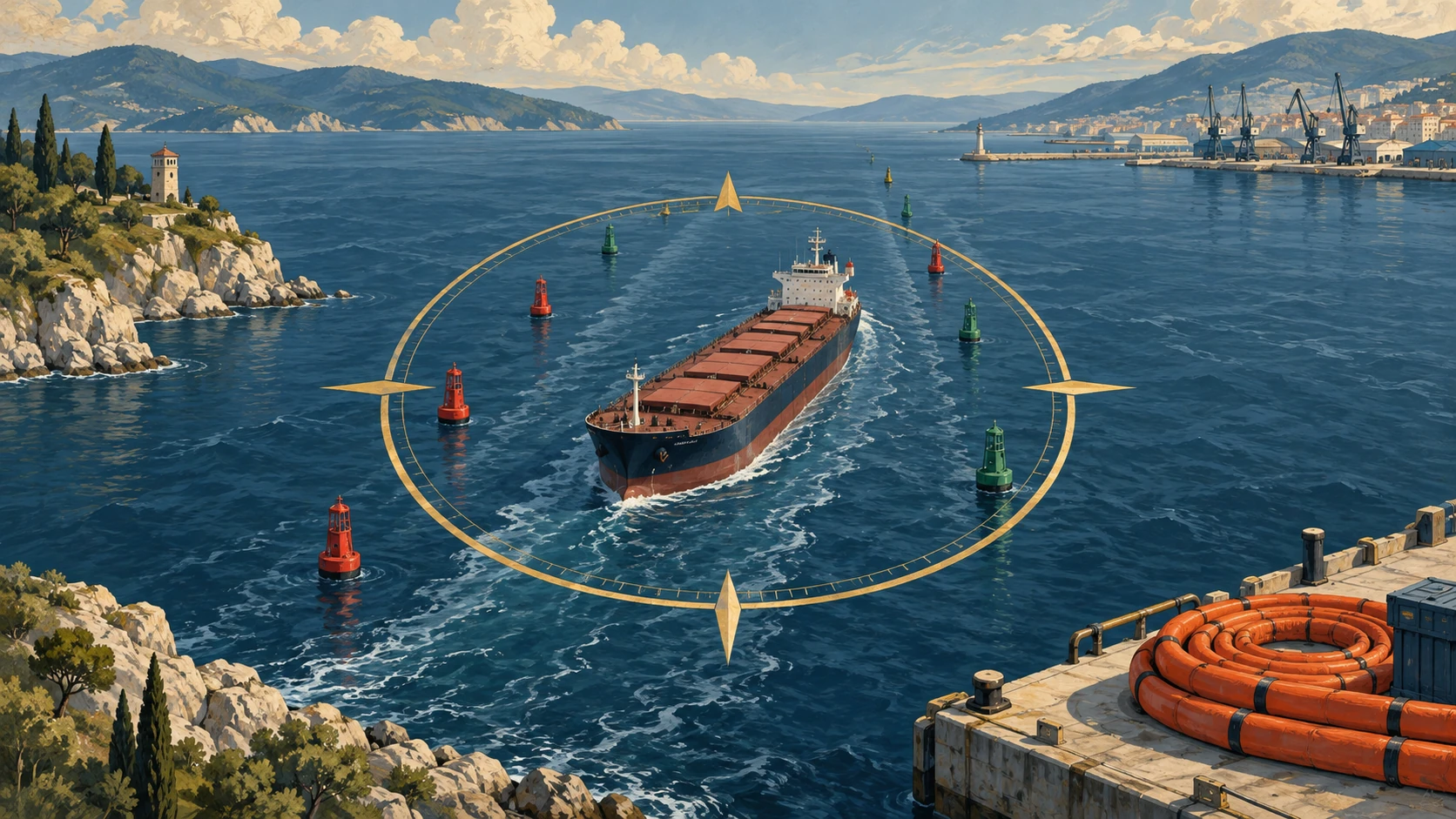
On 14 September 2026, the International Maritime Organization (IMO) reported that an inception workshop in Lviv, held from 8 to 10 September, launched implementation of a technical-cooperation project supporting Ukraine’s Special Maritime Corridor in the Black Sea.
The project is funded by the United Kingdom, France and the European Union and follows IMO Assembly resolution A.1183(33). According to the IMO, it is intended to help Ukraine implement relevant IMO instruments while improving the corridor’s safe, secure and efficient operation. The initial needs assessment identified three workstreams: priority maritime-safety infrastructure and equipment; preparedness and response for marine pollution; and maritime-traffic facilitation.
The next implementation phase is expected to provide capacity-building and technical assistance for a national contingency plan and marine-pollution legislation. It will also include work on implementation of the IMO Facilitation Convention and stronger port-clearance procedures. Ukraine’s Ministry for Development of Communities and Territories had previously confirmed that the European Commission joined the “IMO for Ukraine” initiative, alongside earlier support from France and the United Kingdom, and described the programme as supporting navigation safety, environmental protection and continued operation of the maritime corridor.
This is not a new navigation regime, a reopening decision, or a security guarantee for individual voyages. Rather, it is a formal move from project design into implementation, centred on Ukrainian authorities’ regulatory capacity, emergency preparedness and port-process resilience. The IMO announcement does not alter the need for vessel-specific security assessments, contractual due diligence or compliance with port, flag-State, insurer and war-risk requirements.
Why this matters: corridor reliability depends not only on physical access to ports but also on the quality of incident response, pollution preparedness and administrative clearance. For owners, charterers and cargo interests, the project is a constructive medium-term signal that supports more resilient port calls and documentation processes. In the near term, operators should continue to treat calls connected with the Ukrainian Black Sea corridor as elevated-risk operations: verify current port-entry conditions and notices, maintain clear escalation arrangements between ship and shore, review pollution-response contacts and contingency documentation, and ensure voyage orders allocate delay, deviation, security and cancellation risks clearly.
Given the continuing conflict-related exposure in the Black Sea, the operational outcome and timetable of the project remain subject to external security conditions. The development is therefore assessed as materially relevant but medium risk.
Credit: TWS Brasil Insight.
Technology supported research and drafting. TWS retains editorial responsibility for the published content and cited sources.
Need operational support?