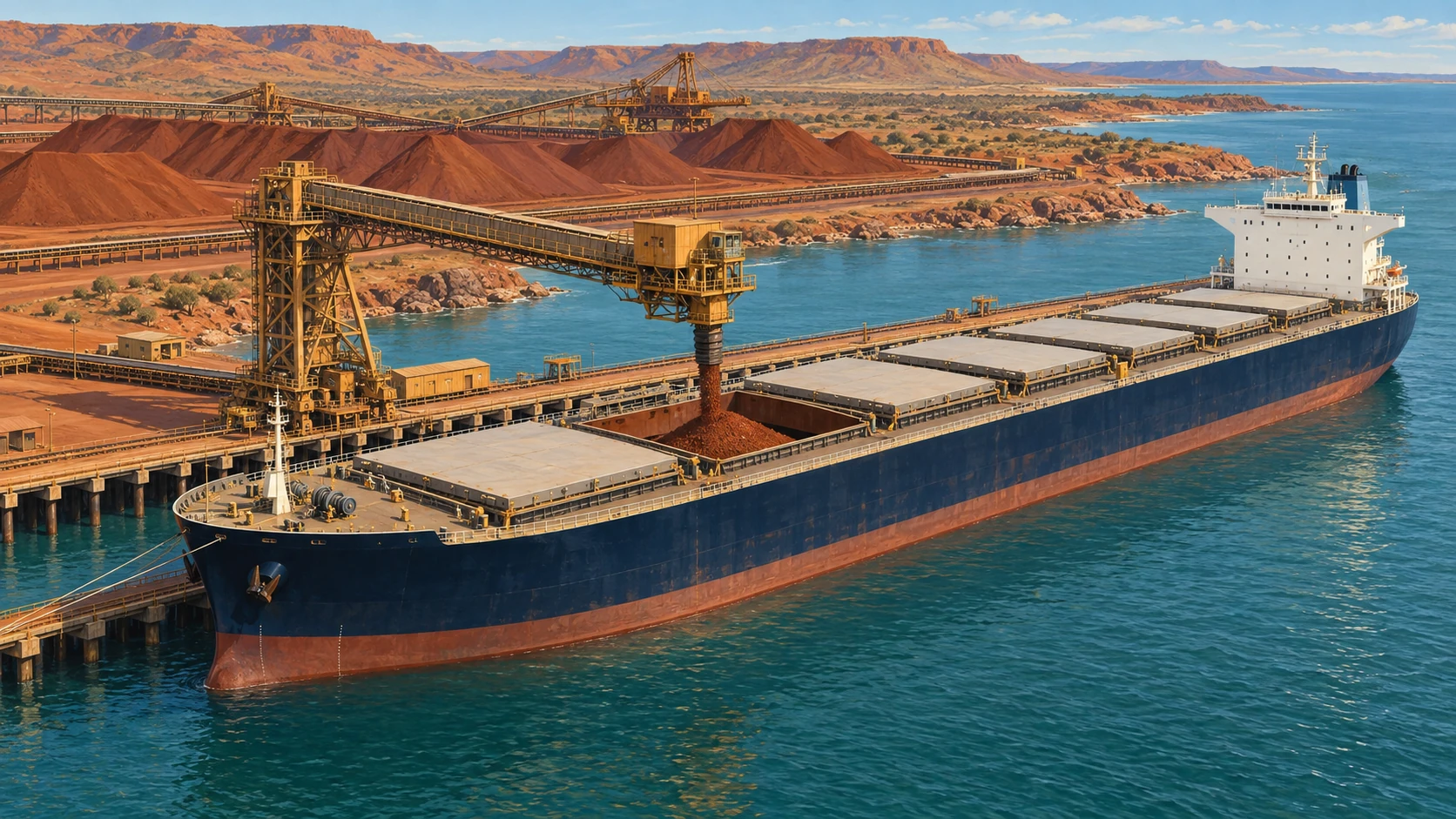
Pilbara Ports reported on 11 September that Port Hedland handled 47.4 million tonnes in August 2026, including 46.6 million tonnes of iron ore exports. The iron ore export total was 5% above August 2025. Across Pilbara Ports, monthly throughput was 65.9 million tonnes. Port Hedland imports were 179,000 tonnes, down 2% year on year; Dampier handled 14.8 million tonnes, down 8% year on year.
The verified operational development is therefore a year-on-year increase in iron ore liftings through Port Hedland, the principal Australian loading point for the commodity. Iron ore accounted for about 98% of Port Hedland’s reported August throughput. The release does not allocate the ore volume by producer, destination, grade, vessel class or loading terminal, and it does not establish whether the higher monthly export total will persist through September.
The timing is important for Capesize participants. In its 11 September Week 37 assessment, the Baltic Exchange said regular miner participation on the Australia–China C5 route temporarily lifted fixtures to around USD 18.50 per tonne, before late-week fixing fell back below USD 18 per tonne. The Exchange described South Brazil and West Africa as quieter, with C3 values generally in the low USD 41-per-tonne range, while its BCI 182 5TC finished the week at USD 55,139, down USD 1,492 from the Monday level.
Taken together, these sources indicate that strong physical export availability from Port Hedland did not by itself sustain late-week Pacific freight firmness. This is analysis rather than a reported causal finding: freight direction also depends on prompt vessel availability, Chinese discharge demand, cargo timing, weather, port performance and charterers’ coverage decisions. The Port Hedland statistics are backward-looking August data, whereas the Baltic report captures fixture sentiment during the following week.
Why this matters: charterers and owners should avoid treating higher port throughput as a standalone bullish freight signal. For voyage estimates and positioning, the relevant question is whether September stems continue to enter the market faster than open Capesize tonnage. Operators should monitor berth windows, loading sequence, weather-related interruptions and laycan concentration at Pilbara terminals. Cargo interests, masters and P&I stakeholders should also maintain close control of cargo declarations, draft and loading-plan changes, hold preparation and safe-loading communications, particularly where compressed iron ore programmes create pressure on turnaround. The current evidence supports continued high loading activity, but not a conclusion that Pacific Capesize earnings will immediately strengthen.
Credit: TWS Brasil Insight.
Technology supported research and drafting. TWS retains editorial responsibility for the published content and cited sources.
Need operational support?