
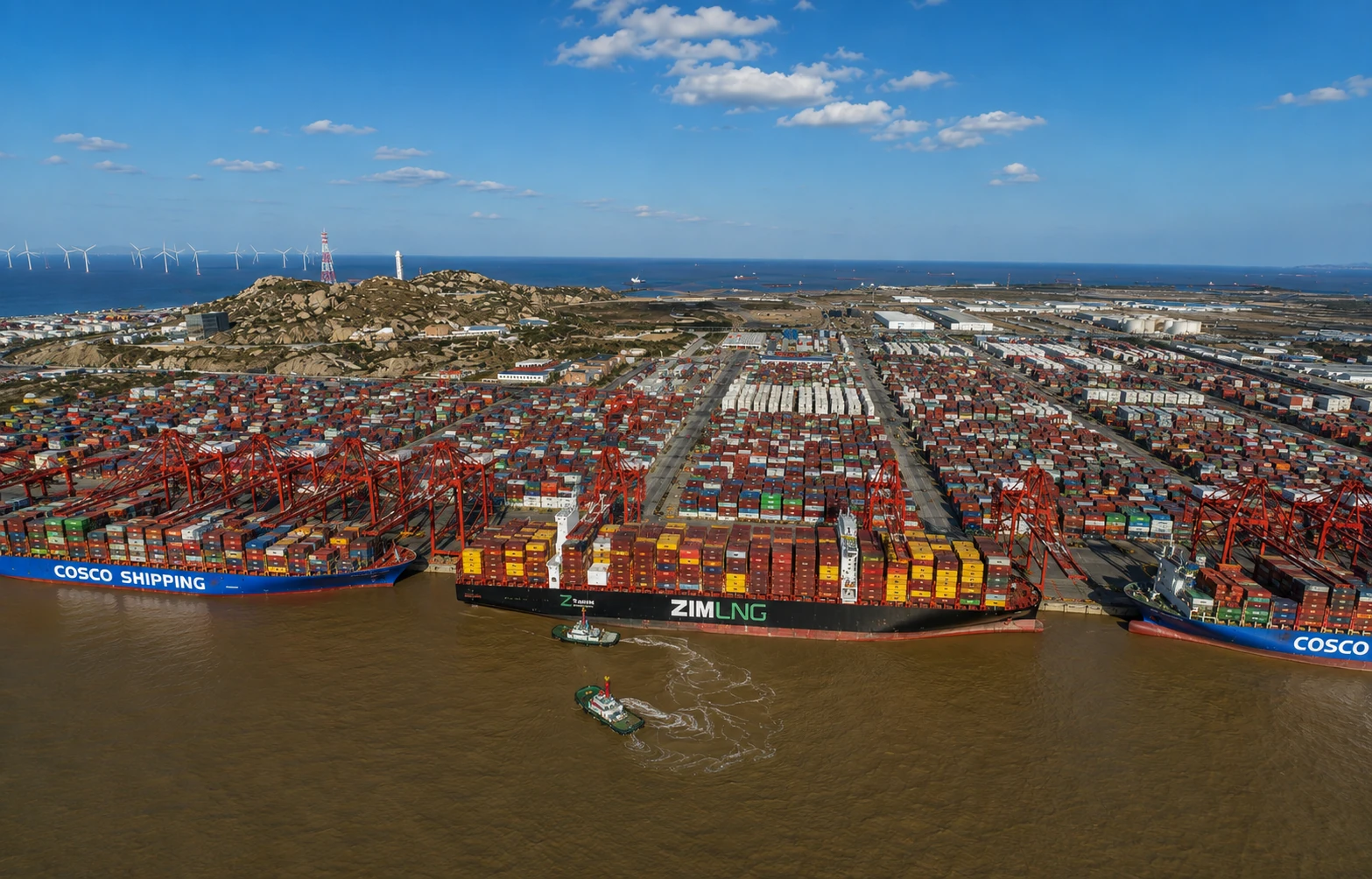
Shanghai International Port Group (SIPG), operator of the Port of Shanghai, reported estimated home-port container throughput of 28.737 million TEU in the first half of 2026, a 6.2% increase from the same period of 2025. Estimated cargo throughput was 304.78 million tonnes, up 2.7% year on year. The figures were reported by Shanghai’s municipal state-assets authority on 22 July, drawing on SIPG operational data.
The same report said Shanghai handled 187,312 TEU in a single day on 9 June, exceeding its previous daily record. It also recorded 68,088 TEU during one work shift, another reported high. Trade reporting independently reproduced SIPG’s half-year container and cargo figures.
These are volume and productivity indicators, not evidence by themselves of congestion or service disruption. No port-wide operational restriction, closure or casualty was identified in the reviewed material. However, the combination of higher half-year throughput and record short-period handling indicates that Shanghai’s terminals, marine services and hinterland interfaces have been operating at a high level of intensity.
For carriers and vessel operators, the immediate significance is schedule resilience rather than a confirmed delay event. At very high-utilisation hubs, concentrated arrivals, missed berth windows, weather interruptions, equipment outages or landside peaks can more readily translate into berth re-sequencing, shortened cut-offs, altered receiving windows and omitted calls. Masters and operators should therefore continue to confirm berth prospects, pilotage and towage arrangements, terminal-side cargo readiness, bunker plans and feeder connections close to arrival.
For cargo interests, the throughput growth supports the view that Shanghai remains a highly liquid gateway and transhipment hub, but it also reinforces the value of checking operational milestones rather than relying solely on long-range schedules. Shippers with time-sensitive cargo should verify gate-in, rail or barge handover and empty-equipment arrangements with their carrier and terminal counterpart. Claims and P&I teams should preserve contemporaneous notices, terminal interchange records and vessel or port-log timestamps where schedule changes affect cargo delivery or contractual performance.
Why this matters: Shanghai’s scale means even small deviations in terminal productivity or vessel sequencing can propagate across Asia–Europe, transpacific and regional feeder networks. The reported records are positive operational data, but they also warrant disciplined port-call planning during periods of vessel bunching or high yard demand.
Technology supported research and drafting. TWS retains editorial responsibility for the published content and cited sources.
Need operational support?