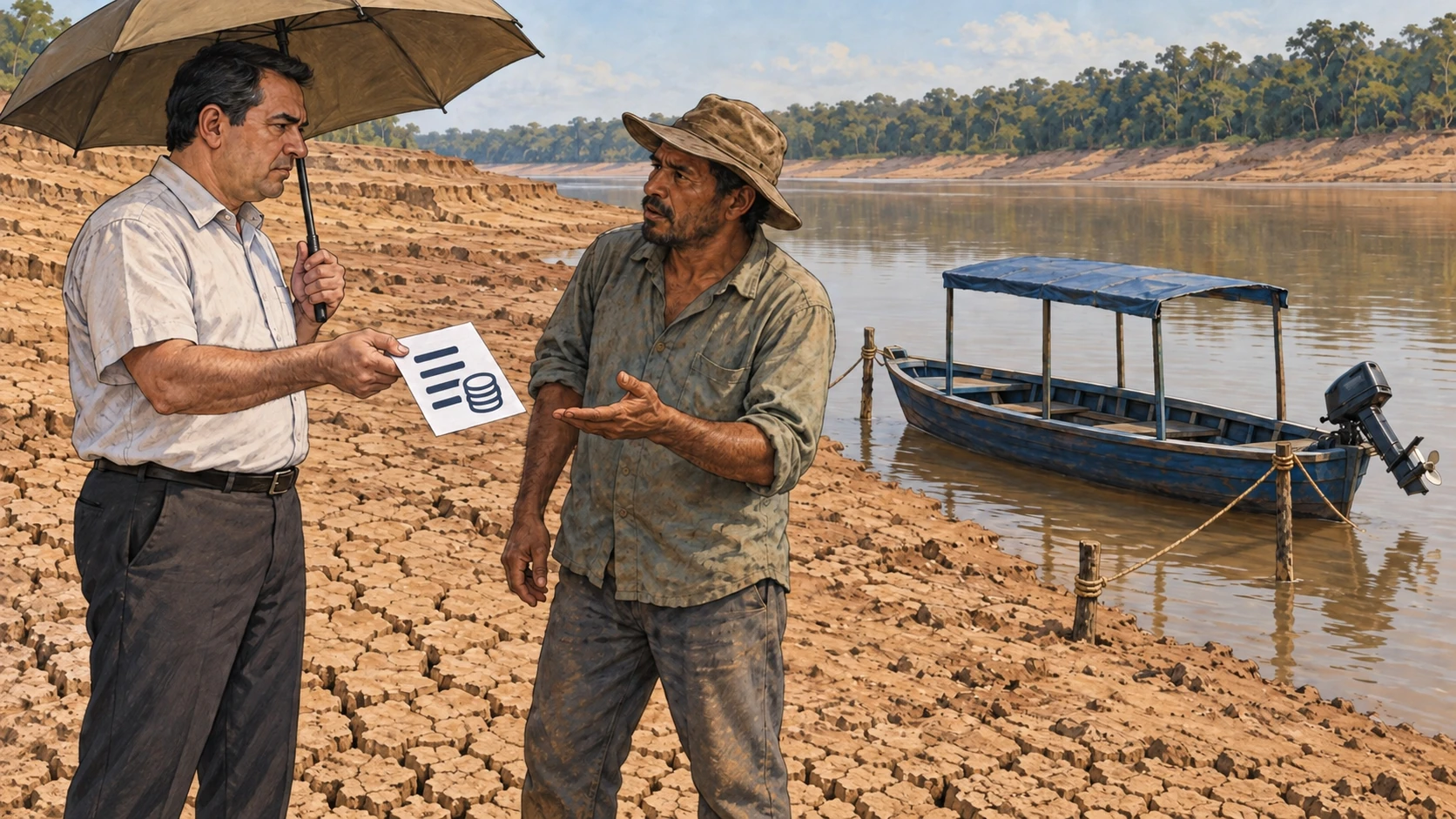
Brazil’s National Waterway Transportation Agency (ANTAQ) announced on 15 September that shipping companies serving the Amazon region will need regulatory approval before applying a Low Water Surcharge (LWS), commonly called the “dry-season fee.” The measure was published in the Official Gazette and changes the previous practical position in which prior notification alone could precede a surcharge.
Under the new process, a carrier must notify ANTAQ at least 30 days in advance and submit technical, operational and economic evidence. The filing must connect hydrological conditions to actual operating effects—such as reduced cargo capacity, navigation restrictions or additional costs—and explain the proposed charge. ANTAQ may approve the surcharge, approve it with conditions, or decline approval. It may also reconsider its decision if river or operating conditions change, and plans to assess later whether projected impacts and costs materialised.
The framework retains limited routes to tacit approval. ANTAQ says this may occur after its 30-day decision period where a submission is adequately documented, excluding time taken for requests for further information. Tacit approval may also arise earlier where ANTAQ recognises a relevant hydrological or operational situation. For 2026, the stated reference is a Rio Negro official water level at the Port of Manaus of 17.7 metres or below. Existing 2026 surcharge notices connected to that threshold may receive transitional preliminary approval, subject to review.
This is not a freight-rate cap and does not ban low-water surcharges. ANTAQ explicitly notes that waterborne transport remains subject to price-setting freedom. Its intervention instead establishes an ex-ante evidential test intended to determine whether an exceptional charge has a technically and economically supportable relationship to the disruption claimed. The agency says information previously submitted by operators had generally not demonstrated alleged extraordinary costs with sufficient detail.
**Why this matters:** For cargo interests, charterers and insurers, an LWS should no longer be treated simply as an automatically effective seasonal line item in Amazon-linked contracts or invoices. Parties should preserve carrier notices, ANTAQ filings or approvals, hydrological data, declared load restrictions, voyage instructions and any documented extra-cost basis. Operators should ensure that commercial announcements, booking terms and customer communications align with the regulatory status of the charge. The rule also heightens the value of contemporaneous evidence where low water affects draft, loading plans, barge deployment, transshipment or delivery schedules. It does not remove the underlying navigability risk: ANTAQ’s earlier contingency work identifies extreme hydrological events as capable of disrupting cargo transport, port operations and regional supply continuity. ([gov.br](https://www.gov.br/antaq/pt-br/noticias/2026/antaq-reforca-controle-sobre-cobranca-da-taxa-de-seca-na-regiao-amazonica/))
Credit: TWS Brasil Insight.
Technology supported research and drafting. TWS retains editorial responsibility for the published content and cited sources.
Need operational support?