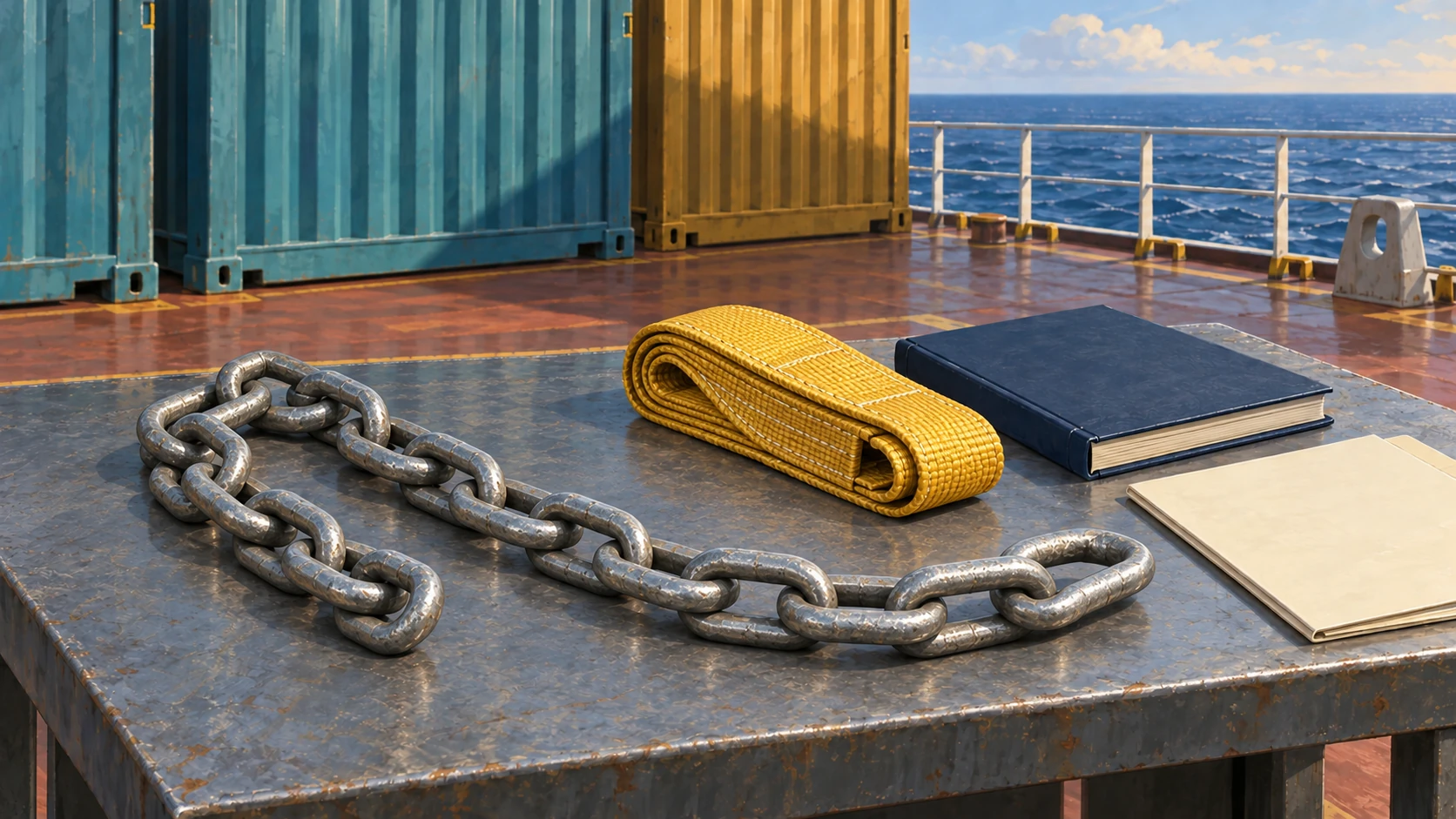
A joint Concentrated Inspection Campaign (CIC) on the securing of cargo units and cargo transport units is under way across the Paris MoU and Tokyo MoU regions from 1 September to 30 November 2026. The campaign is conducted alongside routine port State control (PSC) inspections and tests compliance with applicable SOLAS requirements on loading, stowage and securing. A vessel should receive only one CIC inspection in each MoU region during the campaign.
Verified facts: Port State Control Officers are using a common questionnaire. The official Paris MoU notice says deficiencies will be recorded and that the port State response may range from recording a deficiency to detention. Industry guidance based on the questionnaire identifies particular attention to the approved, ship-specific Cargo Securing Manual (CSM); officers’ familiarity with it; container verified gross mass (VGM) reflected in cargo plans; Cargo Safe Access Plans where required; the availability and maintenance of fixed and portable securing equipment; bridge-visibility safeguards; and Safety Management System procedures for heavy-weather navigation and cargo protection.
For cargo interests and liability stakeholders, the immediate significance is not confined to avoiding a PSC delay. The inspection focus closely overlaps with the evidence needed after a cargo shift, container loss, wet-damage allegation or other cargo casualty. A compliant manual that is not followed in practice, incomplete VGM records, undocumented substitutions of securing gear, or poor records of weather decisions can complicate both casualty reconstruction and the allocation of contractual and insurance responsibilities.
Analysis: Operators should treat the questionnaire as a voyage-specific control and evidence-preservation checklist, rather than solely an inspection-preparation exercise. Before loading, the master and shore team should reconcile the approved CSM, cargo plan, declared VGM, stack and deck limitations, and the actual securing arrangement. During operations, they should retain contemporaneous records of lashing inspections, defective or replaced equipment, exceptions, communications with terminals and cargo interests, and any corrective measures. Photographs should be dated, identifiable by location and linked to cargo or equipment records. Where heavy weather is encountered, bridge records should connect the forecast and conditions observed with routeing, speed, course, cargo checks and measures taken under the vessel’s procedures.
Why this matters: Early, structured evidence does not itself establish causation or liability. It does, however, preserve the factual trail that surveyors, P&I correspondents, insurers and claims handlers need to distinguish pre-existing, loading-related, operational and weather-related causes. The current CIC creates a practical window for owners, charterers and cargo interests to test whether paper compliance and actual shipboard practice match before a loss—or a detention—forces that examination.
Credit: TWS Brasil Insight.
Technology supported research and drafting. TWS retains editorial responsibility for the published content and cited sources.
Need operational support?