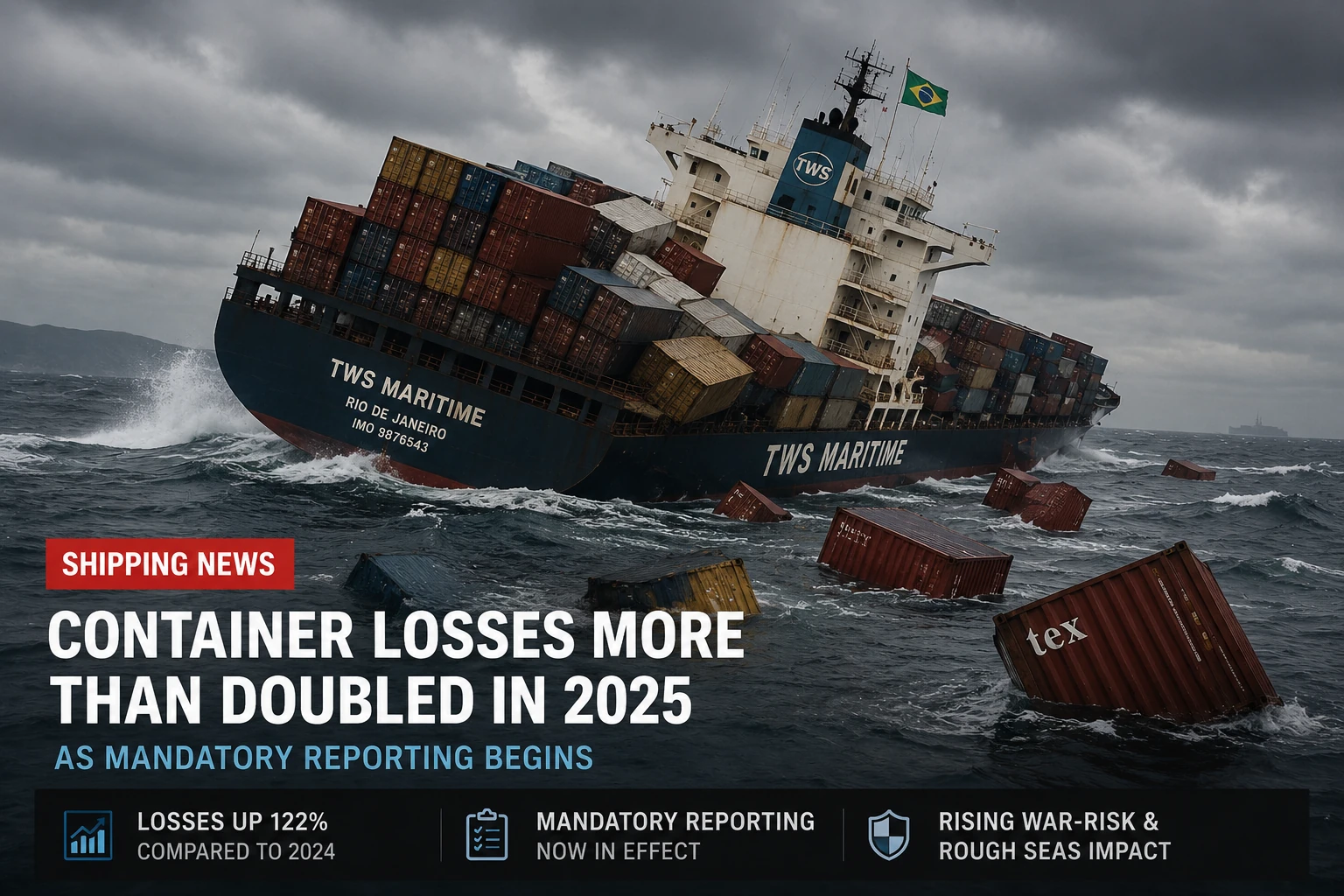
The World Shipping Council (WSC) reported on 25 June that an estimated 1,478 containers were lost at sea during 2025, compared with 576 in 2024. The estimate covers approximately 280 million containers transported globally and equates to about 0.0005% of container movements. Although the percentage is small, the absolute increase is material for cargo interests, carriers, P&I clubs, insurers and coastal authorities because losses can combine cargo claims, navigational hazards, pollution exposure, salvage costs and recovery disputes.
According to WSC, one major casualty accounted for 640 containers, about 43% of the annual total. WSC identified severe weather and ocean conditions, especially on North Atlantic and North Pacific routes, and fire-related incidents as key contributors. It also recorded 128 recovered containers in 2025, its highest reported recovery figure since it began tracking recoveries in 2023. The figures are industry estimates based on direct submissions from members representing roughly 90% of global container-vessel capacity; they should therefore be read as a strong sector indicator rather than a casualty register maintained by a public authority.
The development has added practical significance because IMO amendments to SOLAS and MARPOL entered into force on 1 January 2026. They require the master of a ship involved in a container loss to communicate available particulars without delay to nearby ships, the nearest coastal State and the flag State. Reports may include the position, number of containers and relevant information on dangerous goods. Flag States must pass information on container losses to IMO through GISIS. The rules also cover observations of drifting containers.
For claims handling, the earliest hours after a loss remain decisive. Operators should preserve voyage-data, weather-routing, stability and lashing records; container manifests; verified gross mass data; dangerous-goods declarations; photographs and video; onboard communications; and notices exchanged with terminals, charterers, cargo interests and authorities. A documented chain of custody for damaged or recovered units can be as important as the physical survey itself. Cargo interests should avoid disposal, repacking or repair of affected goods before survey arrangements and insurer instructions are agreed, except where safety, mitigation or regulatory requirements demand immediate action.
Why this matters: the 2025 result does not by itself establish a system-wide decline in container-shipping safety. It does show how a limited number of high-consequence events can dominate annual cargo-loss exposure. Prevention should therefore focus on controls that remain effective in abnormal conditions: truthful cargo declarations and verified weights, competent packing and securing, weather-informed operational decisions, fire-risk screening, and a pre-agreed evidence-preservation and notification protocol.
Technology supported research and drafting. TWS retains editorial responsibility for the published content and cited sources.
Need operational support?