
Maritime services
Draft Survey: cargo determination by draft
Verify the mass of bulk cargo handled through changes in the vessel’s displacement, with readings, calculations and records of the conditions influencing the result.
Request attendance
The Draft Survey provides a technical reference for the quantity loaded or discharged. TWS Maritime Service organizes the measurements and calculation records so that shipowners, charterers and cargo interests can understand the result and examine differences against other records.
When to engage
Plan the service before commencing bulk solid cargo operations, allowing for the initial and final surveys. The method uses the change in the vessel’s displacement, less variations in weights not attributable to cargo, to estimate the mass handled.
It is also useful when the client needs to analyze differences between shipboard and shore figures. In this situation, the availability of the original measurements and operational records determines the scope of the possible review.
Scope of survey
Depending on the vessel, the operational sequence and access conditions, the work may include:
- Reading initial and final drafts at accessible marks, with records of the conditions found during each survey.
- Use of the vessel’s hydrostatic data, verification of water density and application of the relevant corrections.
- Determination of changes in ballast, fuel, fresh water and other relevant weights between the two conditions.
- Review of available documents and organization of the measurements, assumptions and calculations supporting the determined quantity.
What the client receives
The report includes identification of the vessel and operation, the initial and final conditions, the data used and the calculation record. The observations make it possible to relate the result to the circumstances under which the measurements were taken.
Where included in the scope, comparison with declared quantities or other records presents the differences for technical and commercial assessment. The purpose is to provide the client with an understandable basis for checking the figures, requesting clarification and deciding whether further investigation is required.
Limitations and supplementary checks
Swell, currents, visibility of marks, vessel list, ballast data and inconsistencies in the tables may affect the determination. The result is an estimate by the draft method, subject to limitations that must accompany its interpretation; it does not represent a weighing without uncertainty.
Cooperation from the vessel and knowledge of movements during the survey are essential. A difference from shore weighing must be examined considering both bases, without automatically attributing it to a cargo shortage.
Request this service
Provide the vessel and IMO, port and terminal, type of bulk cargo, expected quantity and loading or discharge schedule. State the requested stages and the availability of tables and records in order to plan the surveys with the vessel’s team.
Related services

Cargo loading and unloading supervision
Monitor critical handling stages with field observations, incident communications and records that help assess measures during the operation.
View full details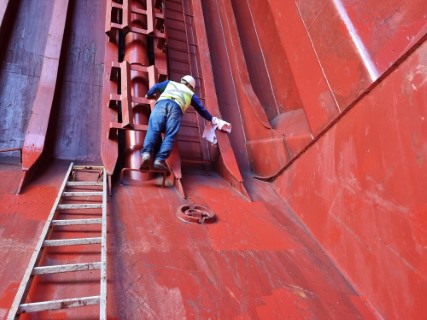
Cargo Hold Cleanliness Inspection
Assess the readiness of cargo holds for the next cargo, recording apparent conditions, the location of outstanding items, and reference to the criteria defined for the inspection.
View full details